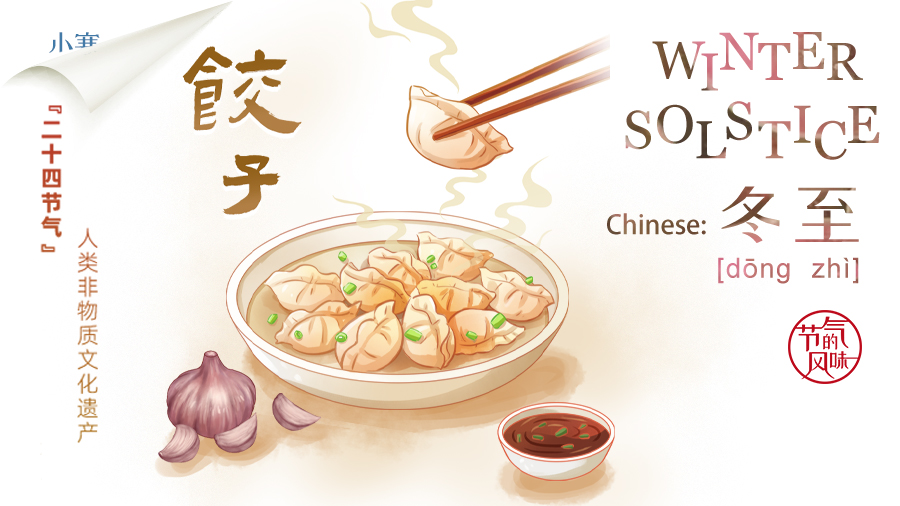
Winter Solstice
Overview
Winter Solstice, is one of the 24 solar terms in the traditional Chinese solar calendar. This solar term marks the day with the shortest period of daylight and the longest night of the year, typically falling around Dec 21 or 22. The Winter Solstice is celebrated in various cultures worldwide and is particularly significant in Chinese traditions, where it has been observed as an important festival since ancient times.
Cultural Significance and Traditions
During the Han Dynasty (206 BC-220 AD), Winter Solstice became a formal festival with organized celebratory activities. The Winter Solstice was a time for people to rest and rejuvenate, with both officials and common people taking a break from work.
One of the key cultural practices associated with the Winter Solstice in China is ancestor worship. Families conduct rituals to honor their ancestors, often involving offerings of food and incense. In various regions, this is a time for family reunions, much like the Thanksgiving holiday in the United States. The Winter Solstice also signifies the start of the "nine nine" counting of days to spring, a traditional method to track the coldest days of winter.
The Winter Solstice is rich in symbolism and folklore. It is considered a time when yang (positive, active energy) begins to rise, as the days start to lengthen and nights become shorter. This transition is seen as a shift from yin to yang, symbolizing the rebirth of the sun and the promise of warmer days. The Winter Solstice is also associated with various legends, such as the story of the great doctor Zhang Zhongjing, who distributed dumplings to save people from frostbite, leading to the tradition of eating dumplings today.
Health Practices
Food plays an integral role in Winter Solstice celebrations. Different regions in China have distinct culinary customs. In northern China, it is traditional to eat dumplings on this day. The belief is that consuming dumplings during the Winter Solstice can protect against frostbite in the ears. In southern China, tangyuan (sweet glutinous rice balls) are commonly eaten, symbolizing family unity and togetherness. Other regions might celebrate with wontons, rice cakes, or mutton soup, each dish holding cultural significance.
Modern Celebrations and Cultural Activities
In contemporary times, the Winter Solstice continues to be celebrated in China and among Chinese communities worldwide. While traditional practices are maintained, modern celebrations may also incorporate new elements such as festive gatherings and sharing meals with family and friends. The Winter Solstice is a time to reflect on the year past, enjoy the warmth of family bonds, and look forward to the new year with hope and optimism. Article reference1. 24 Solar Terms: 9 things about Winter Solstice. chinadaily.com.cn. 20232. A time to celebrate tradition. chinadaily.com.cn. 20233. Winter & 24 Solar Terms. en.chinaculture.org. 20224. What to do in Yangzhou to mark Winter Solstice. seeyangzhou.com. 2019Photo Gallery(3 pictures)CategoriesLifestyleTag24 Solar TermsRelatedTemple of Heaven: an Imperial Sacrificial Altar in BeijingTraditional Chinese CalendarTemple of HeavenWontonCatalogue1. Overview2. Cultural Significance and Traditions3. Health Practices4. Modern Celebrations and Cultural Activities- - - []








